
We install insulation into your cavity walls with market leading EPS Bonded Beads. More heat is lost through the walls of your home than in any other way. By investing in cavity wall insulation you can significantly reduce the heat loss from your home. Maintaining the heat inside your home keeps you warm and cosy and reduces energy use and can eliminate condensation issues your home may have. Installing cavity wall insulation in your home will not only help to decrease your heating bills by saving energy lost through the walls, it will also help to reduce your carbon footprint by limiting the amount of CO² and other greenhouse gases emitted from your property.
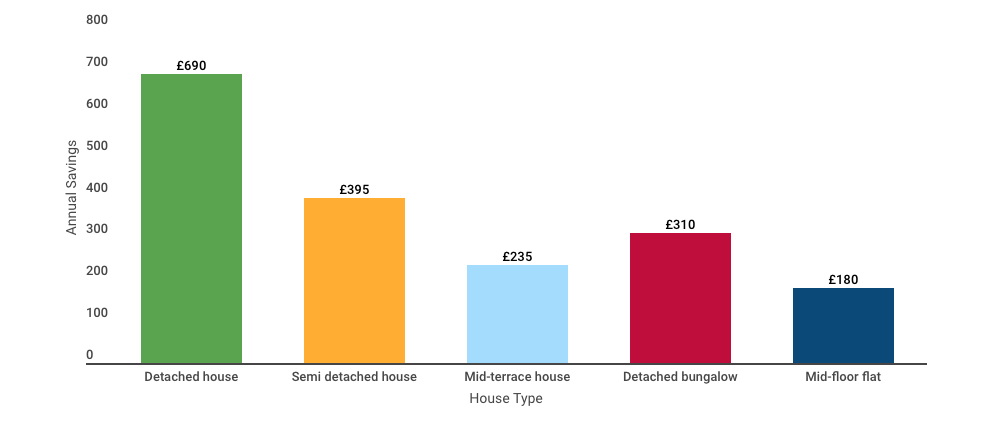
The below estimates of typcial savings are provided by the Energy Saving Trust
These have been based on gas heated homes with fuel prices as of October 2022.
The below estimates are provided by the Energy Saving Trust show the typical Carbon Dioxide savings (kgCO2/year)
Many houses since 1900’s were built with a cavity between the inner and outer walls. Due to this cavity, many of Britain’s homes have thermal performances which are well below the standards required by current building regulations, with unacceptably high levels of heat and energy loss through the walls. Cavity wall insulation is suitable for houses which have a cavity space of at least 40mm between the two brick/block walls. Unfortunately timber framed, steel framed, random stone and solid wall properties are not suitable for cavity wall insulation. However, they may be suitable for our external wall insulation. The EPS Bonded Bead product is an innovative cavity wall insulation material that provides an extremely high level of thermal wall efficiency. The system is both BBA and KIWA certified and has quickly gained a reputation throughout the UK as the best and most trusted insulation systems yet seen for cavity wall installations. EPS bonded bead insulation is ideal for domestic, commercial and industrial use. Due to the drill pattern, air pressure and the nature of the bead we can provide 100% cavity fill with no cold spots, no waste and easy to install. EPS has outstanding durability, it is water resistant and wont break down until it is recycled again.
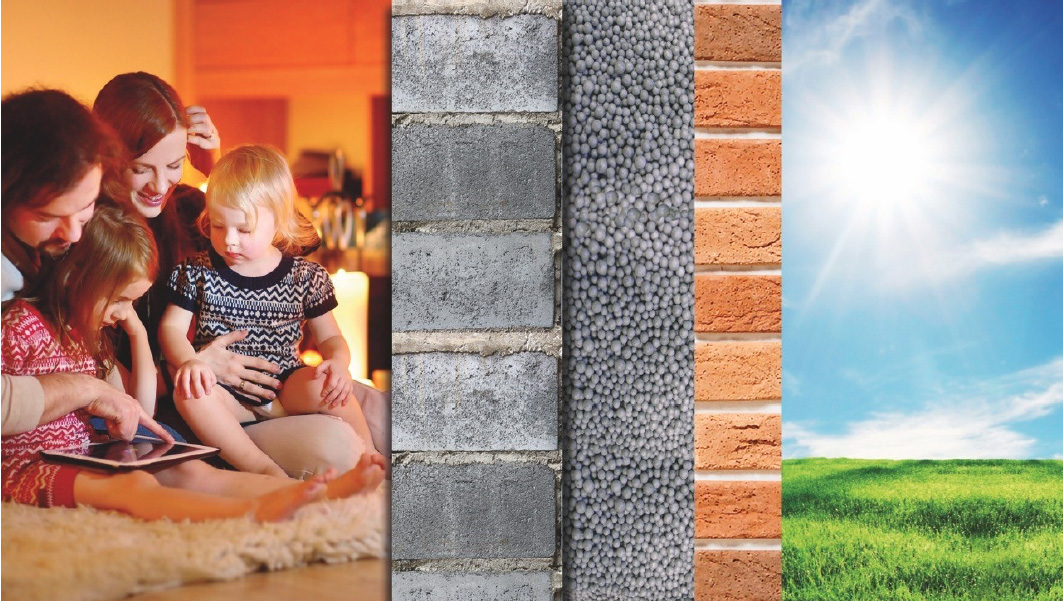
EPS cavity wall insulation is the reassuringly familiar EPS (expanded polystyrene) bead. EPS has outstanding insulating properties and is currently used in many different forms in the construction sector. Selecting Evobead is a good choice for the environment because:
No. The insulation is injected from the outside, so the installers will not be working in your property. And our installers always make sure they leave the outside of your property in a clean and tidy condition.
No. We have specialist safety and access equipment that was designed for use on hard to access properties.
EPS Bonded Bead are an expanded polysterryn. They can be recycled and have come from recycled material already. They wont however, break down, rot, distort, absorb moisture or crush under its own weight. Thus as long as the bead does not get disturbed in the cavity space such as knocking a wall out, it should last the life time of the home.
These are estimated figures published by the Energy Saving Trust. Estimates based on a gas-heated home. The average install cost is unsubsidised. Figures are based on fuel prices as of October 2022. As you can see, the investment pays for itself in about three years. For larger homes, or those heated by electricity or oil, the savings will be significantly higher. As energy prices rise the return will be quicker. Detached house should save £690 a year Semi detached house should save £395 a year Mid-terrace house should save £235 a year Detached bungalow should save £310 a year
Please do remember the team work hard outside all day and a may wish to use the facilities and I am sure the offer of a cup on a cold day would be most welcome.